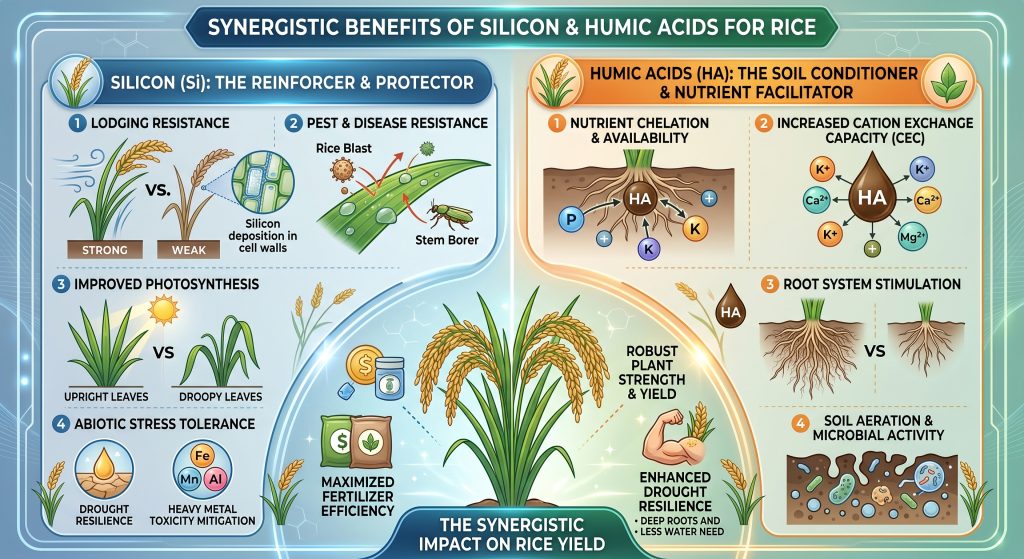
The combination of silicon and humic acids creates a highly effective fertilization strategy for rice cultivation. Rice is a known silicon-accumulating plant, meaning it actively takes up large quantities of silicon from the soil, while humic acids act as a foundational soil conditioner and nutrient facilitator.
Here is a detailed breakdown of the benefits of applying silicon and humic acids to rice crops.
The Role of Silicon in Rice Cultivation
Plants absorb silicon primarily in the form of orthosilicic acid (H4SiO4). Once absorbed, it is deposited in plant tissues as amorphous silica gel (SiO2 nH2O), which provides several structural and physiological advantages.
Lodging Resistance: Silicon is deposited in the cell walls of the stems and leaves, creating a physical “double cuticle” layer. This mechanically strengthens the culms (stems), significantly reducing the risk of lodging (the bending or breaking of stems) during heavy winds, rain, or high nitrogen application.
Pest and Disease Resistance: The hardened epidermal layer acts as a physical barrier against pathogens and insects. It is highly effective in reducing the incidence and severity of fungal diseases like rice blast (Pyricularia oryzae) and brown spot, as well as deterring chewing pests like the rice stem borer and leaf folder.
Improved Photosynthetic Efficiency: By structurally stiffening the plant, silicon keeps rice leaves erect. This upright posture minimizes self-shading and maximizes light interception, which is crucial for photosynthesis and grain filling.
Abiotic Stress Tolerance:
Drought: Silicon thickens the cuticle, which reduces cuticular transpiration and helps the plant retain water during dry spells.
Toxicity Mitigation: In flooded paddy soils, heavy metal toxicity can be a problem. Silicon helps mitigate the toxic effects of excess iron (Fe), manganese (Mn), and aluminum (Al) by promoting their oxidation in the roots or sequestering them in less harmful forms.
The Role of Humic Acids in Rice Cultivation
Humic acids are complex organic molecules that primarily function to optimize the physical, chemical, and biological properties of the soil environment.
Nutrient Chelation and Availability: Humic acids are excellent chelators. In paddy soils, phosphorus often becomes locked up or fixed by iron and aluminum. Humic acids bind to these elements, preventing them from immobilizing phosphorus and making it highly available for the rice roots.
Increased Cation Exchange Capacity (CEC): Humic acids increase the soil’s CEC, allowing it to hold onto vital positively charged nutrients (like potassium, calcium, and magnesium) and preventing them from leaching away during heavy watering or rainfall.
Root System Stimulation: Humic substances act similarly to plant auxins, stimulating rapid and extensive root development. A larger, healthier root mass allows the rice plant to forage more effectively for nutrients and water.
Soil Aeration and Microbial Activity: They improve soil aggregation, which prevents soil compaction. Better soil structure promotes beneficial microbial activity, which is essential for organic matter breakdown and nutrient cycling in the root zone.
The Synergistic Benefits of the Combination
When used together, silicon and humic acids offer complementary benefits that target both the internal structure of the plant and the external soil environment.
| Mechanism | Silicon Action (Plant-Focused) | Humic Acid Action (Soil-Focused) | Synergistic Result |
| Nutrient Uptake | Actively accumulates in plant tissues; improves balanced nutrient distribution. | Increases CEC; chelates locked nutrients in the soil. | Maximizes fertilizer efficiency; reduces overall input waste. |
| Silicon Bioavailability | Provides the raw silicate material. | Organic acids help weather and dissolve silicates in the soil profile. | Humic acids directly increase the amount of $H_4SiO_4$ the rice roots can absorb. |
| Stress Response | Builds physical barriers against pests, diseases, and lodging. | Builds a vigorous root system to recover quickly from environmental shocks. | Robust plants that maintain high yields even under suboptimal conditions. |
| Water Management | Reduces transpiration loss from the leaves. | Improves water retention and percolation in the soil structure. | Enhanced drought resilience during critical growth stages. |
By combining these two components, rice crops receive a comprehensive boost: humic acids ensure the soil environment is primed for maximum nutrient uptake, while silicon ensures the plant structurally utilizes those nutrients to build a resilient, high-yielding crop.